
Open-Weight AI Image Tools
Open-weight AI image tools let you download the model itself — FLUX, Stable Diffusion, Qwen-Image, HiDream — and run AI image generation on hardware you control, fine-tuned on your own material, offline, permanently. This page covers what open-weight really means, which models are worth your drive space, which licences actually permit commercial work, and what the hardware costs. It is also honest about the opposite case, because the generator below is a hosted model, not a downloadable one.
Stated plainly, before anything else
The generator on this page is not one of the open-weight AI image tools it describes. AI Banana runs Nano Banana Pro, a hosted model whose weights you cannot download, run offline or fine-tune. We have written the guide anyway, because the search that brings people here splits cleanly in two: some genuinely need weights nobody can take away, and for them no hosted tool is a substitute — go and install ComfyUI. Others want the images and discover after a weekend of driver troubleshooting that infrastructure was never the goal. The comparison below is written so you can tell which group you are in before you spend the weekend.
Try It Now — Free
Six presets aimed at the kinds of output people build a local rig to get. Establish your quality baseline here first, then decide whether a download closes a real gap.
AI Image Generator — No Download Required
Pick a style, add your own brief, and see what a hosted model produces in seconds — the baseline any local setup would have to beat
Open-Weight AI Image Tools vs a Hosted Generator
Ten dimensions, five to each side. A page that only listed wins for the tool it sells would not be worth reading.
| Dimension | Open-Weight, Run Locally | Hosted Generator |
|---|---|---|
| Running fully offline, no network | Yes — the weights sit on your drive | No. An API call needs a connection |
| Fine-tuning on your own style or product | A LoRA trains in hours on a consumer GPU | Not available — the model is fixed |
| Images never leaving your machine | Guaranteed by architecture, not by policy | Depends on a provider privacy commitment |
| Survives the provider shutting down | A downloaded checkpoint cannot be recalled | Deprecation is entirely out of your hands |
| Cost at very high volume | Hardware once, then electricity only | Per-image pricing that scales with usage |
| Time from decision to first image | An evening of drivers, Python and downloads | About twenty seconds in a browser tab |
| Hardware required | A 12–24GB GPU, or quantised builds and patience | Anything that runs a browser, including a phone |
| Commercial licence clarity | Varies per checkpoint — you must read each one | One set of terms, commercial rights on paid plans |
| Legible text rendered inside the image | Improving fast, still the weakest area | A core strength of current hosted models |
| Ongoing maintenance burden | Drivers, environments, breakage after upgrades | None — somebody else operates it |
VRAM figures describe current flagship checkpoints at full precision; quantised fp8 and GGUF builds run considerably lighter with some quality cost. Licence terms differ per checkpoint and change between releases — always read the model card for the exact version you intend to ship with.
Six Images, No Checkpoint Downloaded
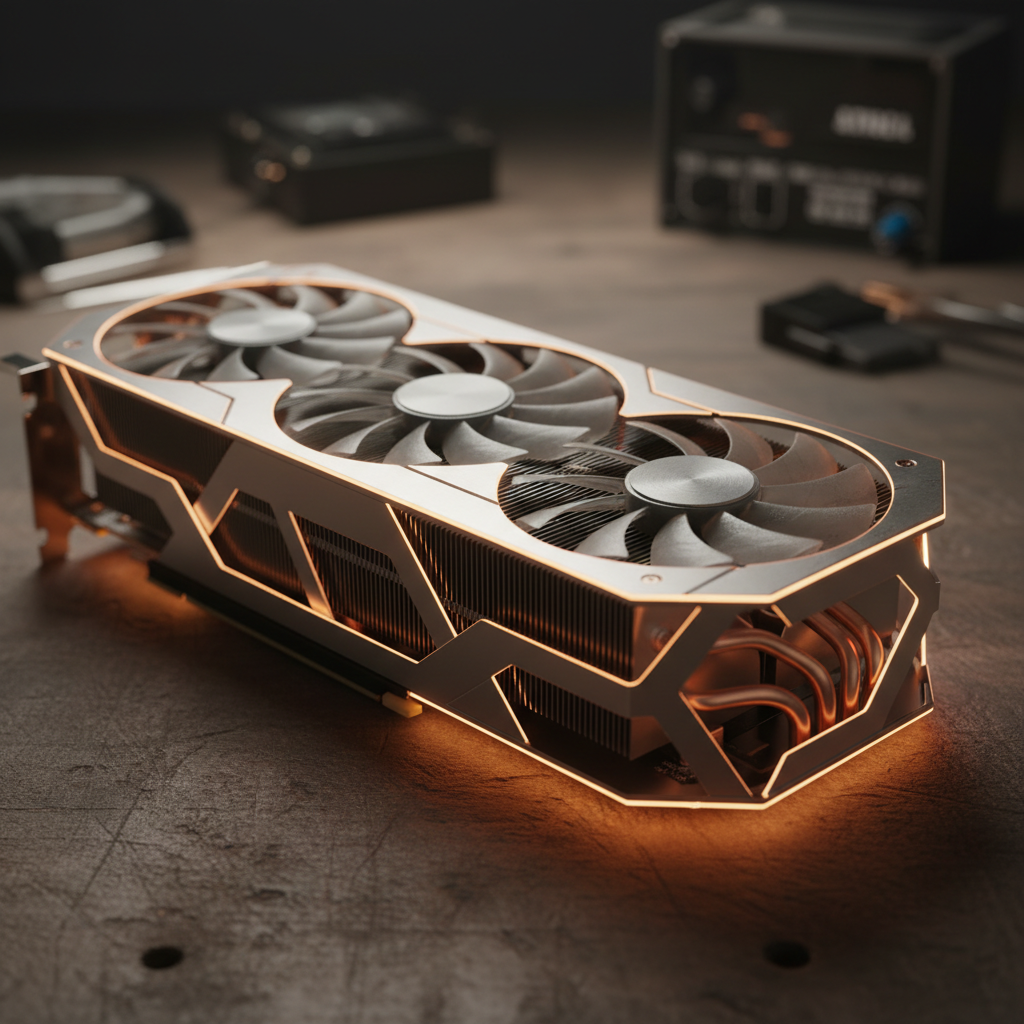
Every image below came from the same hosted model that powers the tool above, unretouched. Use them as the quality bar a local setup would need to clear before the hardware and the upkeep are worth it.




Six Things to Understand About Open-Weight AI Image Tools
The terminology, the model roster, the licences and the ecosystem — the parts that decide whether this route works for you.
Open-weight is not the same as open-source
The distinction gets flattened constantly and it changes what you are actually buying into. Open-weight AI image tools publish the trained parameters — a file you download and run. Open-source, strictly used, would also mean the training code, the dataset and the recipe, and almost none of these releases include those. So you can run the model, quantise it, fine-tune it and ship it inside a product, but you cannot reproduce it from scratch or audit what it learned from. That is still an enormous amount of freedom compared with an API, and it is worth being precise about, because the gap is exactly where most licence surprises live.
The models that matter, as a snapshot
FLUX.1 from Black Forest Labs set the quality bar for downloadable weights and ships as separate variants under different terms. Stable Diffusion XL and 3.5 remain the most widely supported weights anywhere, which matters more than benchmark scores because the tooling, the tutorials and thousands of community fine-tunes all assume them. Qwen-Image from Alibaba is notable for text rendering and a permissive licence, and HiDream-I1 arrived permissively licensed with competitive quality. Efficiency releases such as NVIDIA Sana target modest hardware. Treat every roster, including this one, as dated the week it was written.
The licence is the part that will cost you
Downloadable does not mean commercially usable, and the same model family routinely carries three different licences across three variants — a research-only flagship, a permissively licensed distilled version, and a community licence that is free below a revenue threshold and needs a paid agreement above it. A few releases are genuinely Apache-2.0 or MIT with no strings. The only safe process is to open the model card for the exact checkpoint you intend to ship with, read the licence, and read it again when you upgrade. Community fine-tunes inherit the base terms and often stack their own on top.
The ecosystem is the real product
Weights alone do very little. What makes open-weight AI image tools powerful is everything the community built around them: ComfyUI for node-graph pipelines where each step is explicit and reproducible, the simpler WebUI front ends for people who want a text box, the Diffusers library for anyone wiring generation into software, and the control layer of ControlNet, IP-Adapter, inpainting and regional prompting. That stack gives a level of pipeline control no API exposes, and it is the reason serious studios tolerate the maintenance.
Fine-tuning is the genuinely unmatched capability
Because the weights are local, you can train a LoRA — a small adapter of a few dozen megabytes — on twenty to a hundred images of your character, your product or your house style, and load it alongside the base model. Output then matches your material specifically rather than approximately. Training runs in tens of minutes to a few hours on a consumer card. No hosted API offers an equivalent, and for a studio with a proprietary visual identity this single capability outweighs every operational argument on the other side.
Permanence is underrated until it bites
Hosted models are deprecated, retuned and repriced, and a pipeline built on one can shift under you without warning — the same description returning noticeably different images after an update you were never told about. A checkpoint on your own drive is frozen. If reproducing an image identically in three years is part of the job, whether for a long-running campaign, a legal record or a research result, that stability is not a preference but a requirement, and it is only available from open weights.
When we would tell you to download the weights instead
If your material cannot legally be uploaded anywhere, architecture is the only answer and no hosted privacy policy will satisfy your compliance team. If you need output trained on your own characters, products or house style, a LoRA on local weights is the only route and nothing here substitutes for it. If you must reproduce an identical image years from now, only a frozen checkpoint guarantees it. If you generate at industrial volume, hardware amortises and per-image pricing does not. In all four cases, close this tab and go and install ComfyUI — that is the correct decision and we would rather say so than sell around it.
How to Decide Between Open Weights and a Browser Tab
Name the freedom you actually need
Open weights buy four specific things: offline operation, fine-tuning on your own material, images that never leave your machine, and a model nobody can deprecate. If one of those is a real requirement in your work, stop reading comparisons and go and install ComfyUI, because nothing hosted substitutes for it. If none of them is, you are paying a hardware and maintenance bill for freedoms you will not exercise.
Generate a real brief before you commit hardware
Run the tool below on an image you genuinely need — not a demo idea — and judge the output against the standard your work has to meet. Twenty seconds of testing now is worth more than any roster of models, and it establishes the quality baseline you would be building a local rig to beat. There is nothing to install and no signup to try it.
Install locally only if the gap is real
If the hosted result falls short in a way that fine-tuning, a specific community checkpoint or offline operation would fix, that is a concrete reason to build the local setup, and our guide to running a self-hosted AI image tool covers the infrastructure. Many people find the gap is narrower than expected and keep the browser tab. Both answers are legitimate; guessing at which applies to you is not.
What You Give Up, and What You Get Instead
Six things the hosted side of this trade offers in exchange for the four freedoms that only open weights provide.
No install, no drivers, no download
The honest counterweight to everything above. The generator on this page needs a browser and nothing else — no CUDA version to match, no Python environment, no thirty-gigabyte checkpoint, no weekend spent discovering your card has four gigabytes too little VRAM. If what you needed was the image rather than the infrastructure, this is the shorter path to it.
Legible text inside the image
In-image text remains the weakest area of most downloadable checkpoints, and it is where hosted models currently lead by the widest margin. Signage, packaging mockups, poster headlines and product labels come back readable here, which is often the specific reason a designer trying the open-weight route ends up keeping a hosted generator alongside it.
4K output without a 24GB card
High-resolution generation is exactly where consumer VRAM limits bite hardest, forcing quantised builds, tiled upscaling or simply smaller images. Output here runs to 4K on paid plans regardless of what is in your machine, because the compute is not yours to provide. A laptop and a phone produce the same resolution.
One licence instead of forty
Every checkpoint and every community fine-tune you download carries its own terms, and reconciling them across a pipeline is genuine legal work that teams routinely skip and later regret. A hosted plan is one set of terms with commercial rights included, which is not more permissive than a good open licence but is dramatically easier to be confident about.
Zero maintenance load
The cost of open weights that never appears in a comparison table is upkeep — driver updates that break an environment, a front end that changes its node API, a model format that needs reconverting. Somebody on the team absorbs those hours every month. With a hosted tool that number is zero, and for a small team it is frequently the deciding figure.
Plans from $2.99
A capable GPU is a several-hundred-dollar commitment before the first image, which pays off at high volume and never pays off at low volume. Plans here start at $2.99 with 4K output and commercial rights, and trial credits let you generate before deciding anything — including deciding that open-weight AI image tools are the right answer for you after all.
Who Should Actually Run Open Weights
Four groups for whom the maintenance is clearly worth it, because a hosted model cannot give them what they need at any price.
Studios with a proprietary visual identity
If every asset has to look like it came from the same hand, generic output is close but never right, and the fix is training on your own back catalogue. That is only possible where you hold the weights. Studios in this position almost always run open-weight AI image tools regardless of the maintenance cost, because the alternative is retouching every frame toward a house style the model does not know.
Teams under strict data handling rules
Medical, legal, defence and unreleased-product work often cannot upload source material anywhere at all, and no privacy policy satisfies that requirement — only architecture does. Local weights on a machine with no outbound connection is the answer to the question a compliance officer is actually asking. Our page on a privacy-first AI image tool covers the middle ground for teams whose rules are strict but not absolute.
Developers embedding generation in a product
Shipping generation inside your own software makes per-image API pricing a variable cost that grows with adoption, and makes provider deprecation a product risk rather than an inconvenience. Running open weights on your own infrastructure converts that to a fixed cost and removes a dependency, at the price of owning the operational side. Read the licence of the exact checkpoint before it reaches customers.
Hobbyists and tinkerers with a good GPU
If the machine already exists and the experimenting is the point, the calculation stops being economic. Community checkpoints for extremely specific styles, ControlNet composition rigs, LoRA training on a personal archive — none of this is available through an API at any price, and generation cost drops to electricity. This is where open weights are simply more fun, which is a legitimate reason.
Related Reading
This page is about the models and their licences. For the infrastructure side — GPUs, drivers, ongoing upkeep and what a local rig really costs to keep running — see self-hosted AI image tool. If the reason you are here is data handling rather than customisation, the privacy-first AI image tool page covers the middle ground. To compare against the other closed hosted options instead, there is a breakdown of AI art tools versus Midjourney. And if you have finished weighing routes and simply want an image, the AI image generator is the dedicated page.
Open-Weight AI Image Tools — Common Questions
Open-weight means the trained parameters of the model — the weights file itself — are published for anyone to download and run on their own machine. That is the whole of the claim, and it is narrower than most people assume. Open-weight AI image tools are not necessarily open-source: the training code, the dataset and the training recipe are usually not released, so you can run and fine-tune the model but you cannot reproduce it or audit what went into it. The opposite arrangement is a closed hosted model, where the weights never leave the provider and you reach the model through an API. The practical consequence of open weights is durability and control. Nobody can deprecate a file sitting on your drive, nobody can change its behaviour overnight, and nothing you generate has to travel to someone else server.
Set Your Baseline in Twenty Seconds
Free trial credits, no credit card, no signup wall. Generate the image you were about to build a rig for, then decide whether the rig is still worth it.
Start Creating FreeUnderstanding Open-Weight AI Image Tools
Open-weight AI image tools are defined by one fact: the trained parameters are published, so the model is a file you download rather than a service you call. That is a narrower claim than it sounds, and the precision matters. Open-weight is not open-source — the training code, the dataset and the recipe are almost never released alongside the weights, which means you can run, quantise, fine-tune and ship the model without being able to reproduce it or audit what it learned from. What open weights do give you is four concrete freedoms no API can match: AI image generation that runs entirely offline, fine-tuning on your own material, images that never leave your machine as a matter of architecture rather than policy, and a model nobody can deprecate, retune or reprice after you have built a pipeline on it.
The roster changes every few months, so treat any list as dated. As of writing, FLUX.1 from Black Forest Labs sets the quality bar among downloadable weights and ships as distinct variants under distinct terms; Stable Diffusion XL and 3.5 remain the most widely supported checkpoints in existence, which matters more than raw benchmarks because every tutorial, extension and community fine-tune assumes them; Qwen-Image stands out for text rendering under a permissive licence; and HiDream-I1 arrived permissively licensed with competitive output. Efficiency-focused releases such as NVIDIA Sana target modest hardware directly. But weights alone accomplish little — the real product is the ecosystem around them. ComfyUI turns generation into an explicit node graph where each step is reproducible, the simpler WebUI front ends give you a text box, the Diffusers library wires generation into software, and ControlNet, IP-Adapter, inpainting and regional prompting provide a level of pipeline control that no hosted API exposes. These dynamic AI tools are why serious studios tolerate the maintenance burden.
Two costs are consistently underestimated. The first is the licence. Downloadable does not mean commercially usable, and a single model family routinely carries three different sets of terms across three variants — a research-only flagship, a permissively licensed distilled build, and a community licence that is free below a revenue threshold and requires a paid agreement above it. Some releases genuinely are Apache-2.0 or MIT with nothing attached. The only safe method is to open the model card for the exact checkpoint you will ship with and read it, then read it again at the next upgrade, remembering that community fine-tunes inherit the base terms and often add their own. The second cost is hardware and upkeep. VRAM decides more than clock speed: older Stable Diffusion XL checkpoints sit comfortably at 8 to 12GB while current flagships want roughly 24GB at full precision, with quantised fp8 and GGUF builds bringing that into the 12 to 16GB range at some quality cost. Add tens of gigabytes of downloads, a Python environment, driver versions that must match, and the periodic breakage that comes with a field moving this fast.
Which route wins is not a quality question any more. The gap in raw output has narrowed to the point where it decides little for general work, and on a specialised style a good community fine-tune beats any general-purpose hosted model outright. Choose open weights when one of the four freedoms is a genuine requirement: offline operation, custom fine-tuning, absolute data containment, or permanence. Choose a hosted generator when what you needed was the image — when there is no GPU, no appetite for driver archaeology, no legal capacity to audit forty licences, and a deadline. The generator on this page belongs firmly in the second category and we have said so plainly rather than blurring the line: Nano Banana Pro is a closed hosted model with strong in-image text, 4K output on plans from $2.99, commercial rights included and free trial credits with no signup. Run it on a brief that matters to you. If it clears your bar, you have saved a weekend; if it does not, you now know exactly which gap your local setup has to close, which is a far better reason to build one than a comparison table — including the one above.