
AI Ghost Story Illustrator
The lane up to the house. The nursery no one uses. The corridor with one door open. This AI ghost story illustrator draws the moments your manuscript already describes — chapter openers, cover plates with room for a title, object still lifes and house cutaways — all in a single style you can hold across a whole book.
Try It Now — Free
Six presets, one for each job a story needs done. Each carries its own medium, lighting and framing — pick the closest and paste in the scene from your manuscript.
AI Ghost Story Illustrator
Pick the illustration job, describe your scene, and get spooky book art in seconds
Six Ghost Story Illustrations, Six Different Jobs
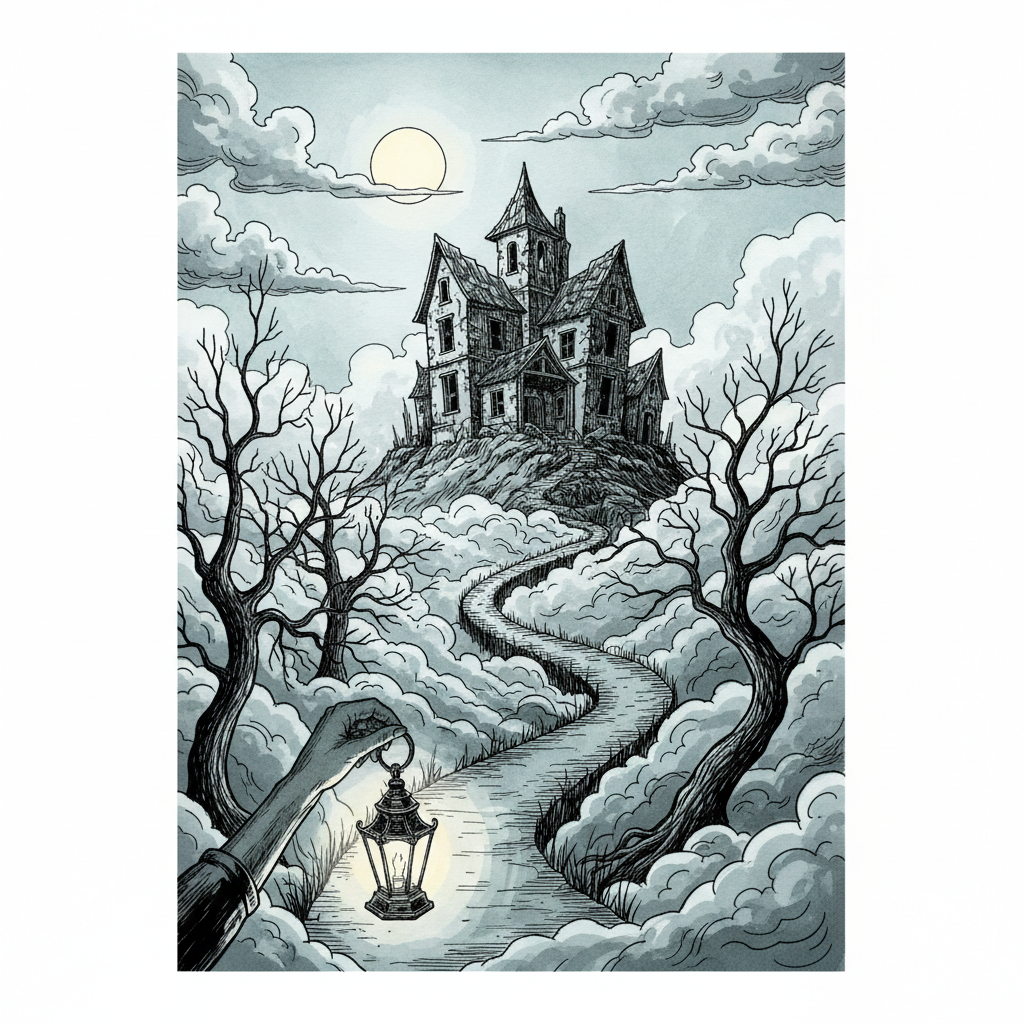
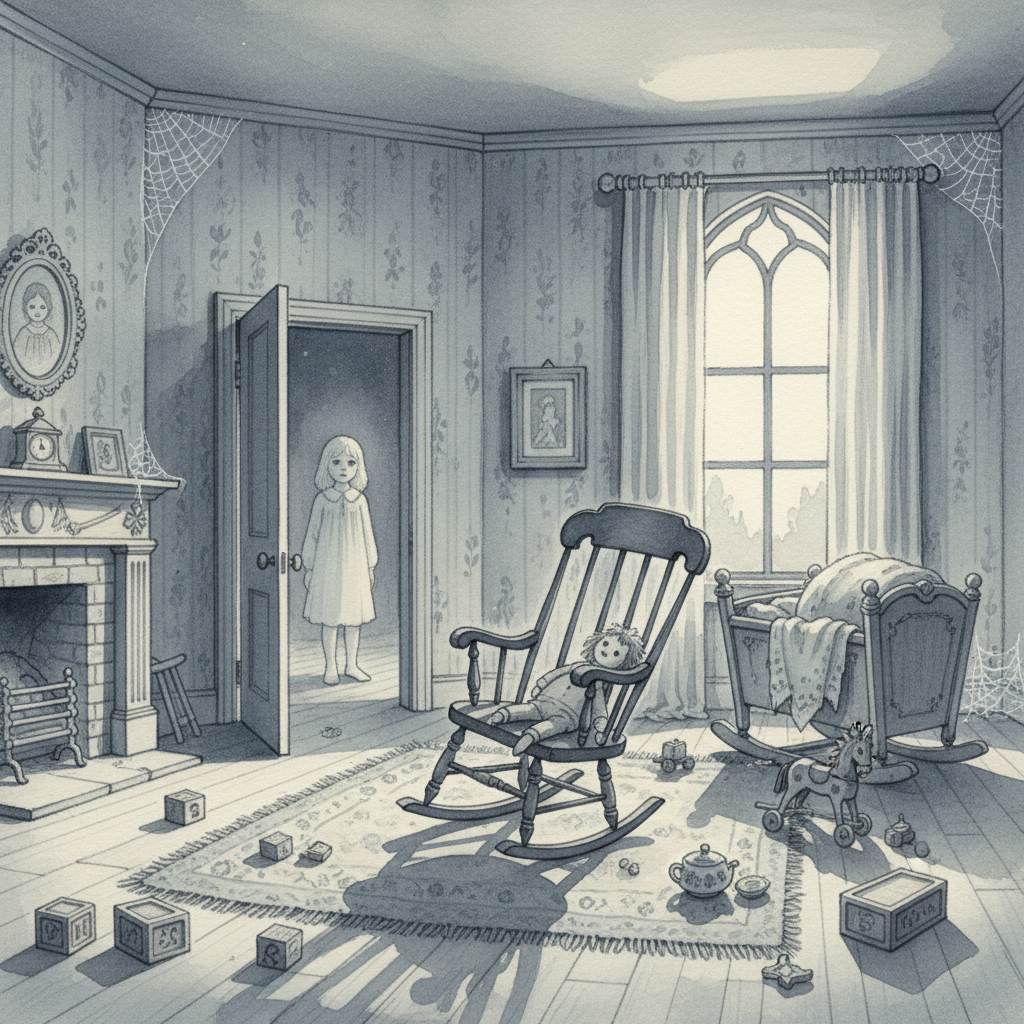
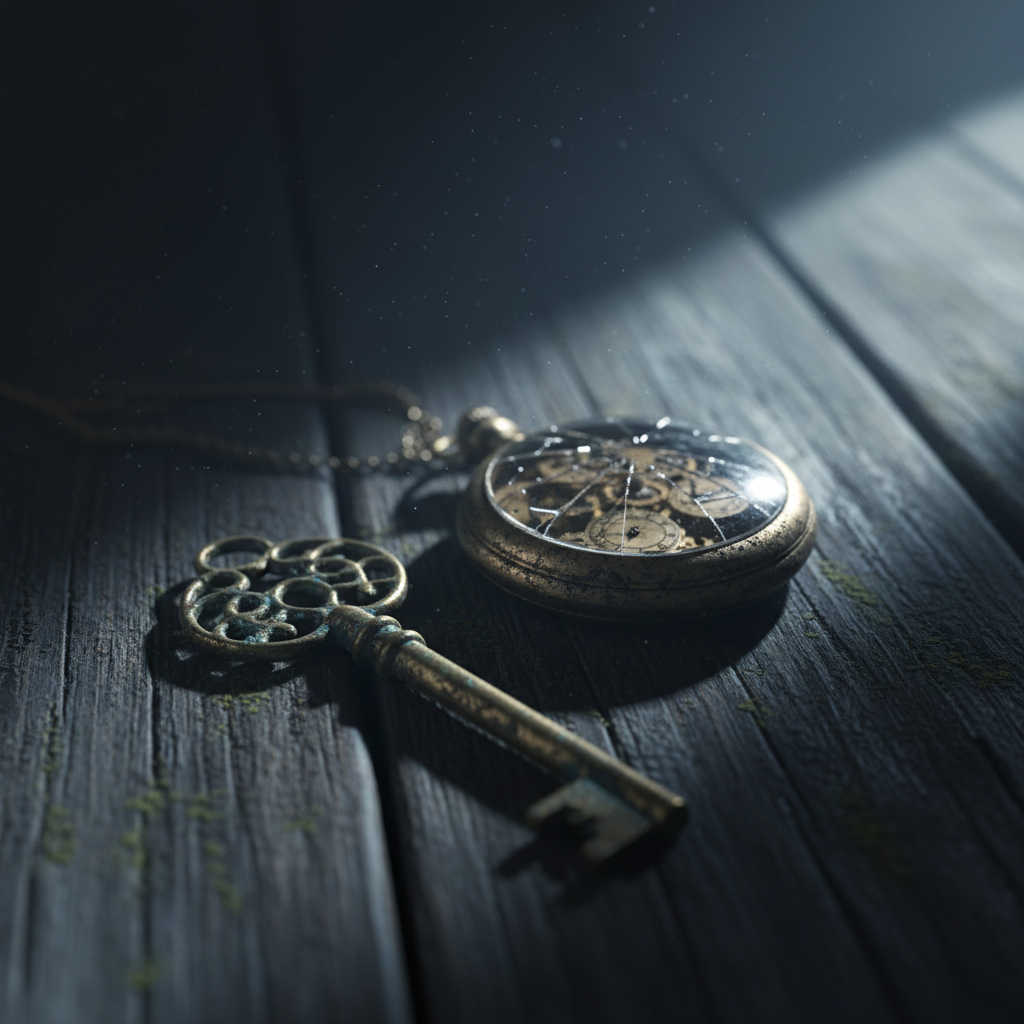
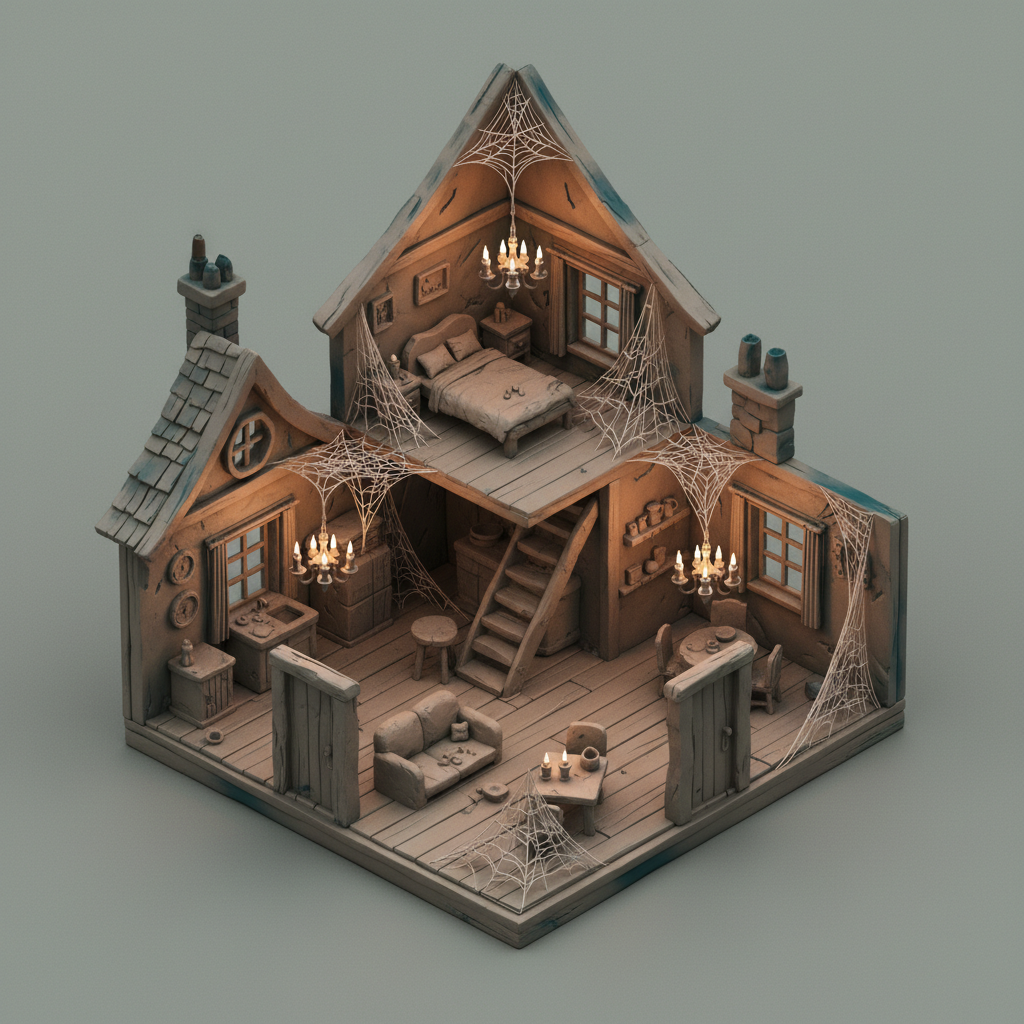
Every plate below came out of the generator on this page, unretouched. The label names the medium, and the title names the place it would sit in a book.

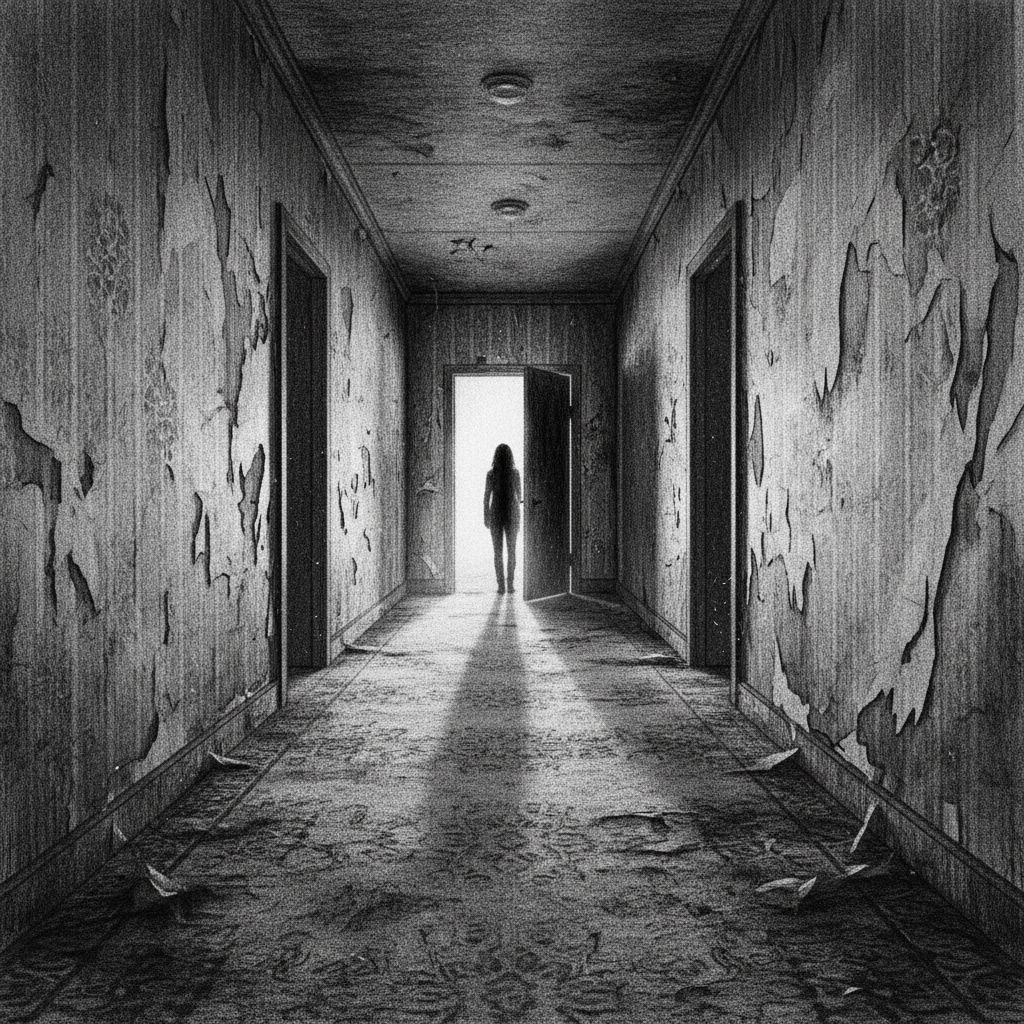
Six Rules for Ghost Story Illustrations That Serve the Text
Illustrating fiction is a different craft from making a striking standalone image. These are the six decisions that separate art belonging to a book from art beside one.
Illustrate the beat, not the plot
A chapter is not a picture. What works as an illustration is a single held moment — the gate before anyone opens it, the chair still rocking, the corridor with one door open. Pick the frame a reader would pause on rather than the one where the most happens, because a drawing cannot show sequence and an image that tries to compress three events reads as clutter. Ask yourself which second of the scene you would photograph if you only had one exposure, and draw that.
One medium clause, repeated exactly
The phrase that names your medium and palette is what binds a set of ghost story illustrations into a book. Write it once — ink and wash, high contrast black linework, cool grey wash — and paste it unchanged into every prompt for that project, varying only the scene after it. Rewriting it from memory between sessions is the single most common reason an author ends up with fourteen pictures that clearly came from fourteen different artists.
Say where the light comes from
Ghost stories are lit stories. A lantern carried at waist height, moonlight through a single tall window, a paraffin lamp behind a closed door — each produces a completely different drawing of the same room, and naming the source is far more reliable than asking for a mood. Adjectives like eerie or foreboding have no stable visual; a low warm light source in a cold blue room does, and it will read as dread every time.
Leave room for the words
Artwork that will carry a title needs empty sky, fog or wall in the upper third, and interior spot illustrations need margin they will not be cropped into. Plan the negative space at prompt time by asking for it explicitly, because adding room afterwards means either regenerating or letting a designer crop into your composition. Never ask the model to render the title itself — image models produce lettering that looks convincing and reads as nonsense.
Keep the haunting mostly offstage
The strongest spooky book art shows the room and lets the reader supply what is in it. A shape at the far end of a corridor, a second shadow, a door open by six inches — these outperform any rendered spectre, because prose has already done the work of suggestion and a fully drawn ghost simply contradicts whatever the reader has been imagining. When something must be visible, make it small, distant and partly obscured.
Mundane settings frighten harder
Crypts and cobwebbed castles announce the genre and therefore defuse it. A suburban stairwell, a caravan in winter, a hospital corridor at four in the morning — ordinary places carry more dread because the room itself is testifying that nothing should be there. Pull the setting from your own manuscript rather than from the horror shelf, and let one wrong detail do the work the gothic furniture was going to do.
How the AI Ghost Story Illustrator Works
Choose the narrative job
Decide what the picture is for before you describe it — a chapter opener, a cover plate, an object break, a map-page cutaway, a confrontation scene. Pick the preset that matches, since each already carries the framing and negative space that job needs. A cover and a spot illustration are composed completely differently, and starting from the wrong one costs more time than any amount of prompt tuning saves.
Paste in your own scene
Add the concrete details from your manuscript — the place, the season, the weather, where the light comes from, how far away anything unnatural should be. Use the nouns your narrator notices; they are almost always the right ones to draw. Resist adding mood words, and resist adding a second event to the same frame. One moment, named precisely, beats a summary of the chapter.
Lock the style and finish the set
Generate, judge, and once one image is right, copy its style clause verbatim into the rest. Work through the remaining scenes in the same sitting, then lay them out side by side and regenerate any that drift. Download at 4K on a paid plan and typeset your title over the cover plate separately.
What This Ghost Story Art Tool Gives You
Six capabilities aimed squarely at illustration that has to live next to prose and survive being printed.
Six presets written for narrative work
Each preset in the generator is a full illustration brief rather than a style tag — medium, palette, light source, framing and how much of the frame stays empty are all stated. They map onto the jobs a story actually needs done: the approach, the interior, the cover plate, the object still life, the house cutaway and the confrontation. Start from the nearest one and edit the clauses that do not fit your book.
Style consistency across a set
Because the style clause and the scene clause are separate sentences in every preset, you can freeze one and vary the other. That is the whole trick to producing twenty ghostly narrative images that belong to the same book — same linework, same palette, same light behaviour, twenty different rooms. Generate the set in one sitting and compare them as a grid rather than one at a time.
Cover art with typographic space
The cover preset composes for a title that does not exist yet, holding the upper third of the frame as flat fog, sky or wall so you can typeset over it afterwards in any layout tool. No lettering is rendered into the image on purpose, which keeps the artwork reusable when the title changes and matches how commercial covers are actually assembled — art and typography as separate layers.
Media that suit print
Ink and wash, charcoal, watercolour, flat vector screenprint and isometric clay render all reproduce cleanly on paper and on e-ink, and none of them fall apart at small sizes the way a heavily rendered digital painting does. They also avoid the hallucinated signature scrawl that painterly styles tend to add in a bottom corner, which is a real problem when the picture is going into a book.
Object and detail illustrations
Ghost stories turn on things — a key, an unsent letter, a stopped watch, a child’s shoe. Small still lifes of those objects make excellent chapter openers and section breaks, they are quick to generate, and they carry menace without spending the reveal. The still life preset lights them the way an evidence photograph would, with one cold source and a lot of shadow.
4K output with commercial rights
Illustration for print needs resolution that survives being placed at full page. Paid plans render at 4K with commercial rights included, which covers self-published covers, interior plates, serial banners and promotional posts. Plans start at $2.99, and trial credits let you test the style clause on two or three scenes before committing to a full set.
Who Uses AI Story Visuals for Ghost Fiction
Four places where ghostly narrative images are part of the deliverable rather than a decoration, and the set has to hold together.
Self-published horror and gothic fiction
A novel needs a cover, a set of chapter marks and two or three promotional images, and commissioning that from an illustrator is out of reach for most first books. An AI ghost story illustrator covers the whole set in an evening at a consistent standard, leaving the budget for editing, which is where it does more good.
Serial fiction and reading communities
Wattpad, Royal Road and Substack serials live on a weekly image. Freezing one style clause and varying the scene gives every instalment its own header while the series stays visually recognisable in a feed, which is what actually drives readers back to a serial they have drifted away from.
Tabletop scenarios and audio drama
Ghost-hunting campaigns, one-shot horror modules and audio drama episode art all need atmospheric plates of specific locations — the farmhouse, the flooded quarry, the room at the end. House cutaways double as player-facing maps, and the still life preset makes excellent handouts for the objects a scenario turns on.
Classroom and workshop storytelling
Creative writing groups, school ghost story projects and library Halloween programmes use illustration as a prompt rather than a decoration. Generating the picture first and asking the room to write the scene that explains it is a well-worn exercise, and having a fresh image for every session keeps it working.
Making a Picture, Not a Book?
This page is for artwork that serves a text. If you want a standalone haunted photograph — a long-exposure apparition, fog between headstones, or something added to a photo of your own hallway — the AI ghost image creator is tuned for that instead. For non-spooky work, the AI illustration generator covers editorial, children’s book and concept art in the same way.
AI Ghost Story Illustrator — Common Questions
An AI ghost story illustrator is a text-to-image tool aimed at the pictures that go around a piece of writing rather than at standalone spooky photographs. You describe a moment from your manuscript — the lane up to the house, the nursery no one uses, the lighthouse the narrator can see from the window — and it renders that moment as illustration: ink and wash, watercolour, charcoal, flat vector or a lit diorama, whichever medium suits the book. The difference from a general generator is that the presets are written around narrative jobs. Chapter openers, cover art, interior spot illustrations and scene beats all have different framing and different amounts of detail, and the presets here already carry those decisions.
Draw the First Chapter
Free trial credits, no credit card, no signup wall. Pick a preset, paste in the scene you already wrote, and see your ghost story illustrated.
Start Creating FreeUnderstanding the AI Ghost Story Illustrator
Ghost fiction has been an illustrated form for as long as it has been a printed one. The Victorian annuals that carried M. R. James and Sheridan Le Fanu ran a plate at the head of each tale, and the plate was never a summary — it was a single frozen moment, usually the one just before anything happens. An AI ghost story illustrator works best when you use it the same way. Ask for the gate rather than the haunting, the empty room rather than the apparition, and let the prose supply what the picture withholds. That restraint is the whole craft, and it is also the thing most first attempts miss, because a blank prompt box invites you to describe the scariest thing in the chapter instead of the quietest.
The presets on this page are therefore organised by narrative job rather than by style. The approach plate frames a building from outside, which is how the majority of ghost stories open. The interior handles domestic wrongness — a room that should be empty and is not quite. The cover plate composes deliberately for typography, holding the top third of the frame as flat fog or sky so a real title can be set over it afterwards in a layout tool, because image models render lettering that looks convincing and reads as garbage. The still life lights the objects a story turns on like evidence photographs, the house cutaway doubles as an endpaper map, and the corridor gives you the confrontation scene with the figure kept small and distant. Between them they cover most of what a manuscript needs.
Consistency is the part authors underestimate. A single striking image is easy; twenty images that clearly belong to the same book are not, and that difference is what separates spooky book art that looks published from spooky book art that looks assembled. The mechanism is simple enough to state in a sentence: write one clause naming medium, palette, linework and light quality, and paste it unchanged into every prompt for that project, varying only the scene description. Generate the whole set in one sitting where you can, lay the results out as a grid, and regenerate the outliers rather than talking yourself into them. Ink and wash, charcoal, watercolour, flat vector screenprint and isometric clay render all hold up in print and, unlike painterly digital painting, none of them try to add a hallucinated artist signature in the corner.
On the practical side, the tool is free to try with no signup, renders in seconds, and offers 4K output with commercial rights on plans from $2.99 — enough to produce a cover, a set of chapter marks and a few promotional images for a novel in a single evening. Two cautions are worth carrying with you. Check the disclosure rules of whatever storefront, magazine or competition the work is going to, since several now ask you to declare AI-assisted artwork. And describe media and scenes rather than naming a living illustrator to imitate or a franchise to borrow from; you will get more original ghostly narrative images that way, and they will be yours to use. If what you actually want is a haunted photograph rather than a drawing, the AI ghost image creator linked above is the better starting point.