
AI-Generated WWII Art
An aircraft over a grey coastline at dawn. A supply truck on a rutted lane. Ration tins on a kitchen table. This tool produces AI-generated WWII art in the media the period was actually painted in — oil, watercolour, gouache and deco screenprint — for books, lectures, wargames and podcasts. Artwork in a period idiom, never archival photography.
This is artwork, not a historical record
Every plate on this page is invented. A generator has no archive behind it, so it will produce aircraft variants that never flew, uniforms blended from several armies and markings that mean nothing — convincingly enough to mislead a casual reader. Use these WWII images as illustration, caption them as AI-assisted artwork wherever you publish, and keep them clearly apart from any real archival material in the same project. Anything that has to be true belongs to an archive, not to a prompt.
Try It Now — Free
Six presets, one for each kind of plate a history project needs. Each carries its own medium, palette and light — pick the closest and describe your own subject.
AI WWII Art Generator
Pick a period medium, describe your subject, and get a finished plate in seconds
Six WWII Art Plates, Six Different Jobs
Every plate below was generated with the same model that powers the tool above, unretouched. The label names the medium; the title names the slot it would fill in a book or a deck.
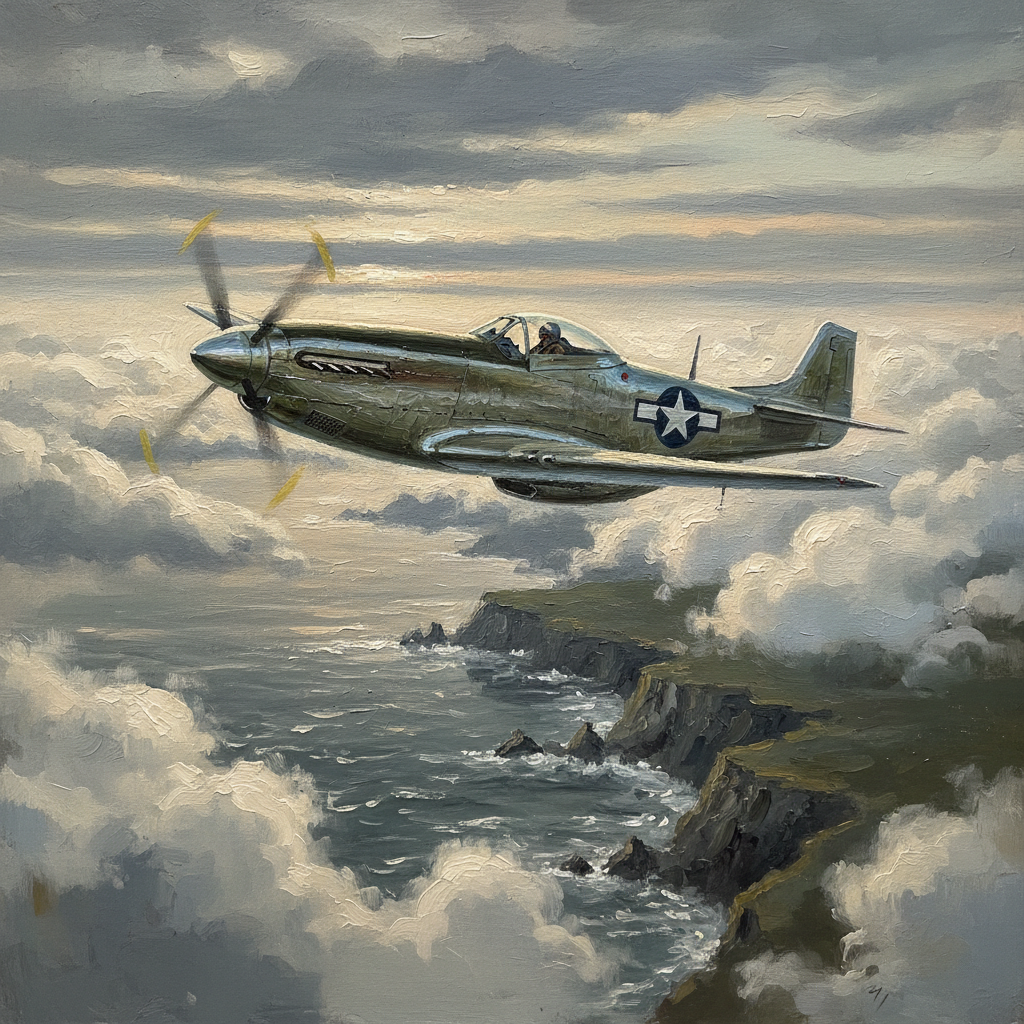
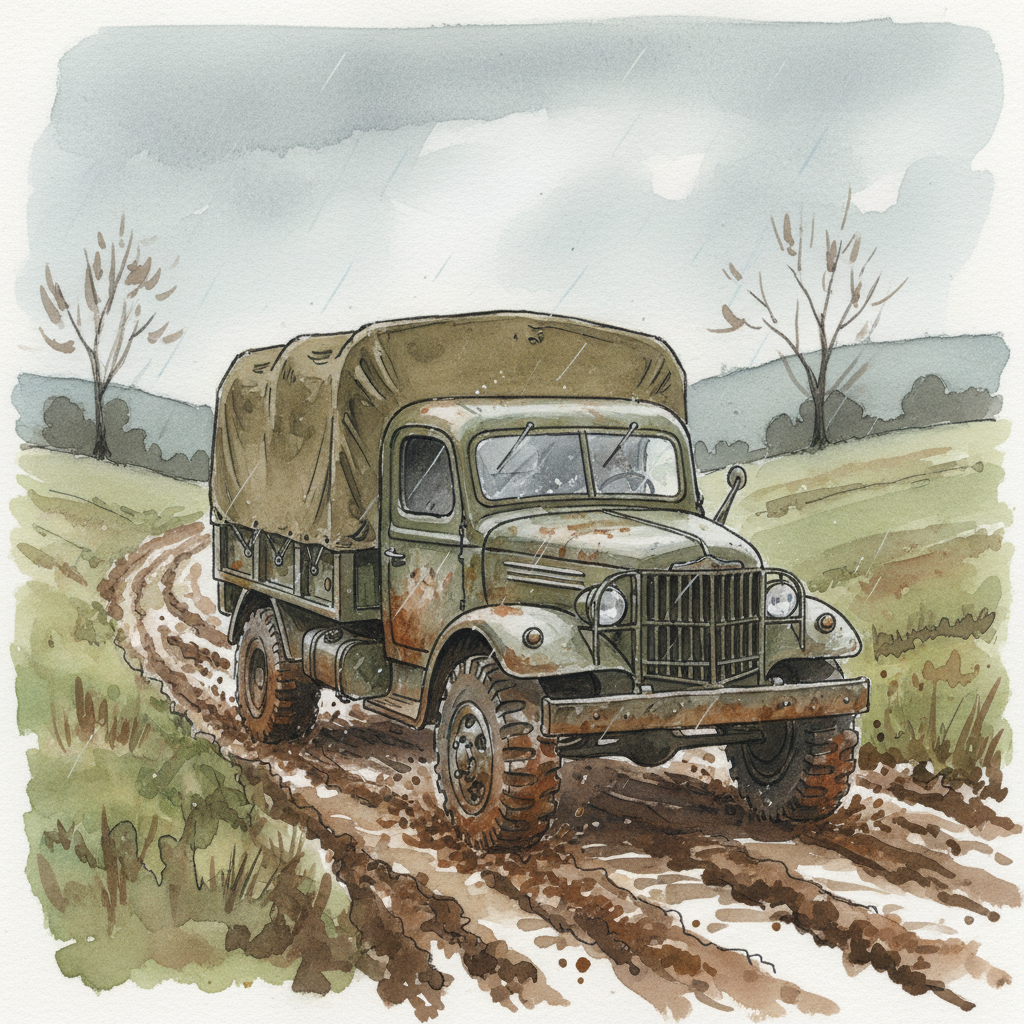
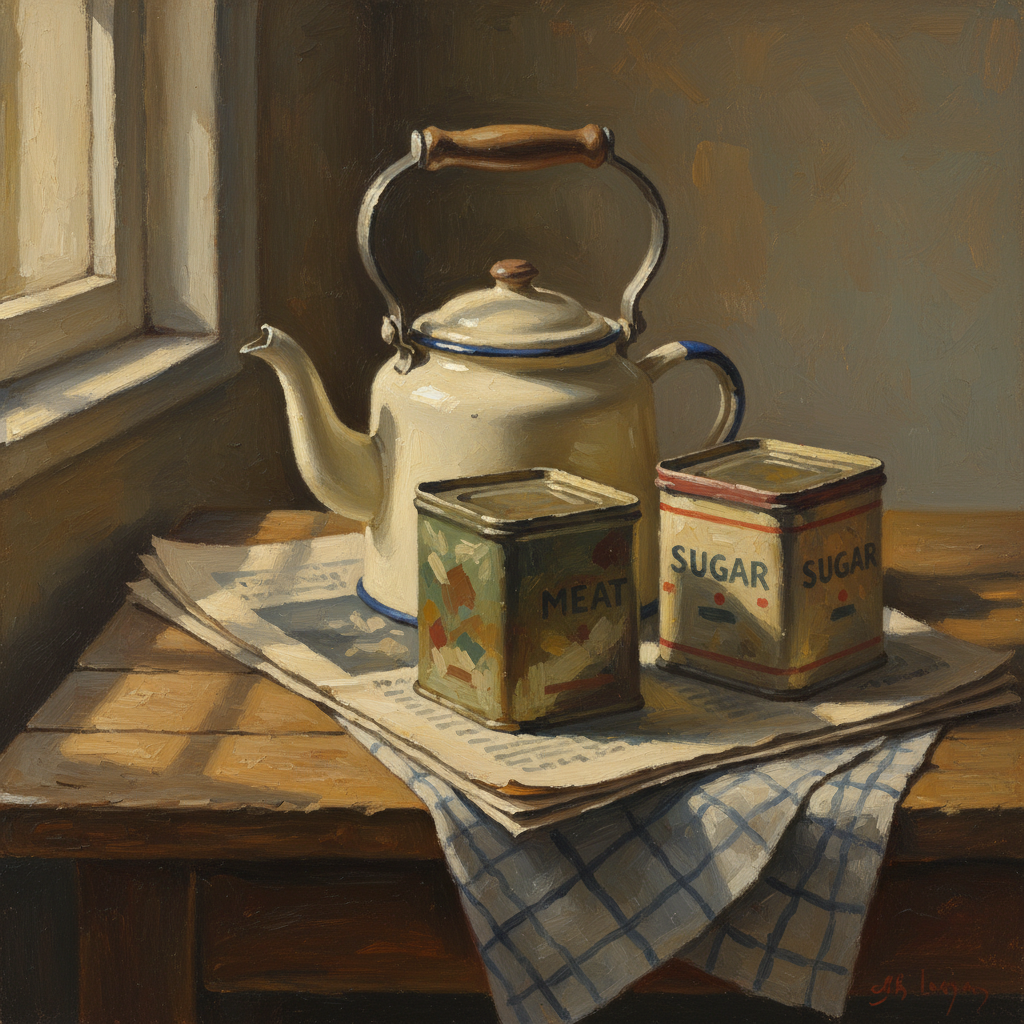
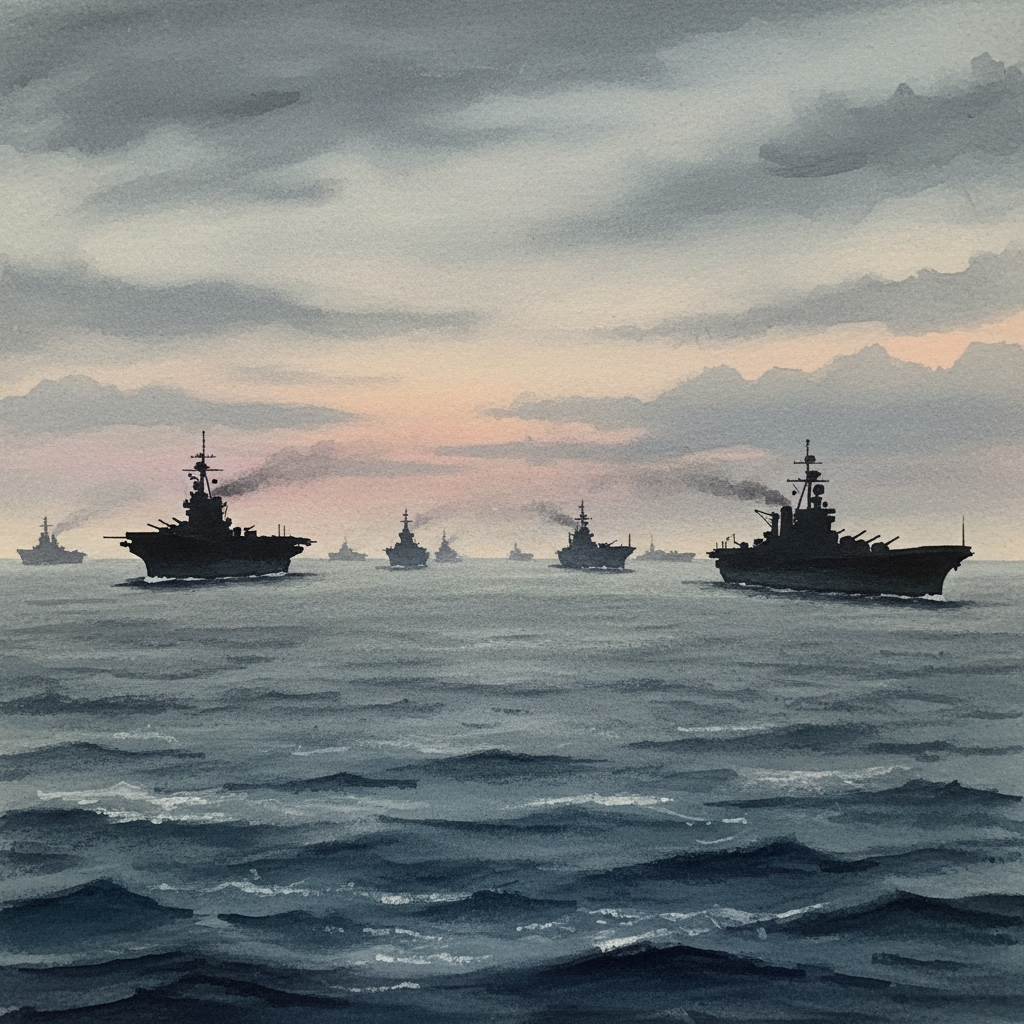

Six Rules for AI-Generated WWII Art That Holds Up
Period illustration is a different craft from making a striking modern image. These are the six decisions that separate a plate that reads as 1943 from one that reads as a filter.
Name the medium before the subject
The period reads through the paint, not through the word wartime. Open every prompt with a clause that fixes medium and palette — vintage 1940s oil painting, muted olive and slate, visible brushwork — and only then describe what is in the frame. The model has a stable visual for oil on canvas and for a limited palette; it has none for an adjective like historic, which is why prompts built on era words alone come back looking like modern digital painting with a sepia filter dropped over the top.
Say where the light comes from
Almost everything that makes period art feel period is light behaviour. Flat north-Atlantic overcast, low winter sun through a kitchen window, a single paraffin lamp on a workbench — each produces a completely different painting of the same subject, and naming the source is far more reliable than asking for atmosphere. It also fixes the palette for you, since a cold flat sky drags the whole frame toward slate and olive without you having to specify a single colour.
Ask for no lettering, every time
Period styles pull hard toward text — poster idioms especially will add nose art, stencilled serials and slogan banners entirely unprompted, and every one of them will be garbled pseudo-lettering that looks convincing at thumbnail size and reads as nonsense at full size. Append no text, no lettering, no signature to every prompt, compose deliberate empty space where a title needs to sit, and set the real words over the plate afterwards in a layout tool.
Machinery and weather over people
The subjects that render most reliably are the ones where silhouette carries the meaning: aircraft in three-quarter profile, a truck on a rutted lane, ships on a grey sea, a radio set on a table. Faces are the weak point of any generator, and crowded figure compositions are where invented uniforms and meaningless insignia creep in. Keeping people distant, in silhouette or out of frame is both the more dependable render and, for this period, the more tactful composition.
Freeze one style clause across the set
A single striking plate is easy; twelve plates that clearly belong to the same book, deck or game box are not. Write the medium-palette-light sentence once, paste it unchanged at the front of every prompt in the project, and vary only the scene after it. Rewriting that clause from memory between sessions is the most common reason a set ends up looking like twelve unrelated artists, and it is entirely avoidable.
Keep the line between art and record visible
This produces artwork in a period idiom, never a document from the period. Generated plates invent aircraft variants, blend uniforms from three armies and render unit markings that mean nothing, and they do it convincingly enough to fool a casual reader. Caption AI-assisted artwork as AI-assisted wherever it is published, keep it clearly separated from any archival material in the same project, and send anyone who needs the real thing to an archive.
How the AI WWII Art Generator Works
Pick the plate you need
Decide what the picture is for before describing it — a cover, a chapter opener, a lecture slide, a game-box panel, an episode header. Choose the preset that matches, because each already carries the framing and the amount of empty space that job needs. An aviation landscape and an object still life are composed completely differently, and starting from the wrong one costs more than any prompt tuning saves.
Describe the subject concretely
Swap in your own scene using specific nouns — the vehicle, the weather, the season, the time of day, where the light comes from. A canvas-back transport truck on a rutted lane in November drizzle lands; a military vehicle in wartime does not. Keep the medium clause untouched, resist adding a second event to the same frame, and leave insignia and lettering out entirely.
Lock the look and finish the run
Generate, judge, and once one plate is right, copy its style clause verbatim into the rest. Work through the remaining scenes in the same sitting, lay them out side by side, and regenerate any that drift. Download at 4K on a paid plan, add your own typography over the deco plate, and caption the set as AI-assisted artwork wherever it is published.
What This World War Art Tool Gives You
Six capabilities aimed at illustration that has to sit next to serious text and survive being printed.
Six presets built for period work
Each preset is a complete illustration brief rather than a style tag — medium, palette, light source, framing and negative space are all stated in full. They map onto the plates a history project actually needs: the aviation scene, the supply road, the home-front interior, the convoy seascape, the field-kit still life and the deco graphic. Start from the nearest one and edit only the clauses that do not fit your subject.
Media that survive print
Oil, watercolour, gouache, chiaroscuro still life and flat screenprint all reproduce cleanly at full-page size and on e-ink, and none of them dissolve at thumbnail scale the way heavily rendered digital painting does. Check the bottom corners before you use one, though: the painterly presets will occasionally sign a plate with a scrawl that looks like an artist mark and is not, which is worth cropping out before anything goes to print.
Composition that leaves room for type
The deco preset holds a clear band of flat colour for a title that does not exist yet, so you can typeset over it later in any layout tool. That separation of artwork and typography is how commercial covers are actually assembled, and it keeps the plate reusable when the title, the episode number or the edition changes.
Style consistency across a series
Because every preset keeps its style clause and its scene clause as separate sentences, you can freeze one and vary the other. That is the whole mechanism behind a run of twenty period plates that read as one commissioned set — same paint, same palette, same light behaviour, twenty different subjects. Generate them in one sitting and compare as a grid.
Object studies and detail plates
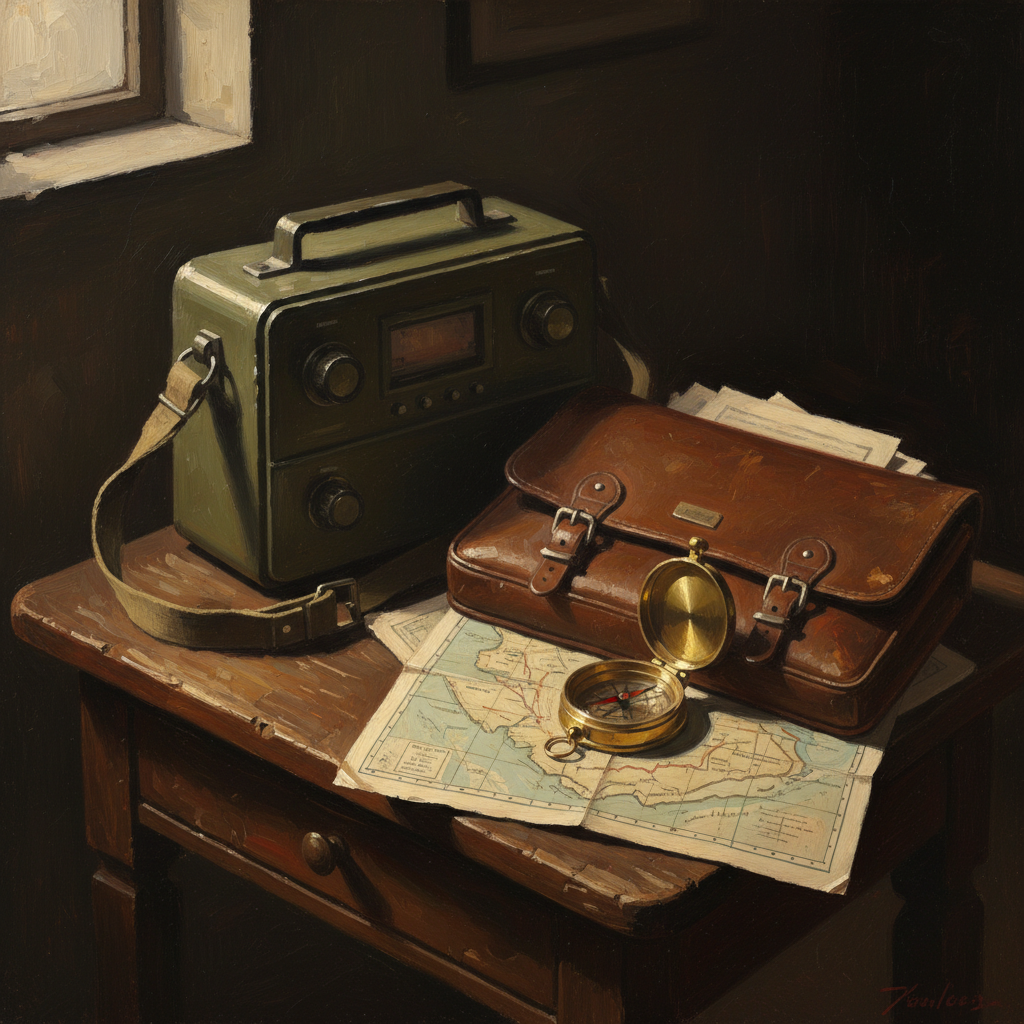
History turns on things — a field radio, a folded map, a ration tin, a brass compass, a stack of letters tied with string. Small still lifes of those objects make excellent chapter openers, section breaks and slide backgrounds, they generate quickly, and they carry the period without needing a single figure in frame.
4K output with commercial rights
Plates destined for print need resolution that survives full-page placement. Paid plans render at 4K with commercial rights included, covering self-published covers, interior illustration, wargame and board-game art, museum-programme graphics and video thumbnails. Plans start at $2.99, and trial credits let you test a style clause on two or three scenes first.
Who Uses AI WWII Art for Digital History
Four places where period plates are part of the deliverable rather than a decoration, and where the set has to hold together across a whole project.
Teaching and lecture material
History teachers need slide backgrounds, worksheet headers and unit covers, and archival photography is a copyright minefield for exactly that use. Period-style plates fill the decorative slots honestly, provided they are captioned as illustration and the actual evidence on the slide still comes from a source. Several teachers use the contrast deliberately — plate beside photograph — as an exercise in how images persuade.
Wargames and tabletop scenarios
Historical wargames, campaign supplements and board-game editions consume enormous amounts of art: box panels, card backs, scenario headers, faction dividers. The diorama and map presets double as player-facing overviews, the still life preset makes excellent handouts for the objects a scenario turns on, and a frozen style clause keeps a whole supplement visually coherent.
Documentary channels and podcasts
History podcasts and video channels publish weekly and need a distinct header every time. Varying the scene against one fixed style gives each episode its own image while the series stays instantly recognisable in a feed. Disclose the artwork as generated in your description — audiences for this subject are unusually attentive to it, and being straightforward about it costs nothing.
Self-published military history and fiction
A novel or a regimental history needs a cover, a set of chapter marks and a few promotional images, and commissioning that is out of reach for most first books. A full set of period plates in an evening leaves the budget for editing and for proper archival permissions, which is where it does more good.
Working From a Real Photograph?
This page generates new artwork. If you have an actual family or archival print that is faded, torn or creased, restoring it is a different job — the AI historical photo restoration tool repairs the image you already have instead of inventing one. For period styling applied to your own modern photos, the AI vintage photo generator covers that.
AI-Generated WWII Art — Common Questions
AI-generated WWII art is original illustration in the visual languages of the 1939–45 period, produced from a written description rather than drawn or photographed. You name a subject, a medium and a light source — a propeller aircraft over a cloudy coastline at dawn, rendered as a 1940s oil painting — and the model composes that plate. The important word is art. What comes back is an artwork in a period idiom, in the same sense that a modern painter working from reference produces an artwork. It is not a photograph from the period, it is not recovered footage, and it carries no evidentiary weight whatsoever. Used with that boundary understood, it covers the illustration jobs that history work genuinely has: chapter plates, lecture slides, wargame box art, museum-programme graphics and podcast episode headers.
Paint the First Plate
Free trial credits, no credit card, no signup wall. Pick a period medium, describe your subject, and see the plate in seconds.
Start Creating FreeUnderstanding AI-Generated WWII Art
The Second World War was one of the most heavily illustrated periods in history, and not only photographically. Official war artists worked in oil and watercolour, recruiting and information campaigns ran on flat deco screenprint, magazines carried painted aviation and naval plates every week, and the domestic record was largely drawn rather than shot. AI-generated WWII art works best when you aim it at those idioms rather than at photography. Asking for a 1940s oil painting of an aircraft over a grey coastline produces something coherent, because oil paint and overcast light are things a model has a stable visual for; asking for a realistic wartime photo produces an uncanny composite that fails every test a historian would apply to it and several a casual reader would.
The presets on this page are therefore organised by plate rather than by style. The aviation preset gives you the magazine-plate composition — machine in three-quarter profile, weather doing most of the work. The supply road handles the reportage watercolour that fills the middle of most illustrated histories. The home-front preset covers domestic interiors and the objects rationing made iconic, the convoy seascape handles maritime subjects at a distance where silhouette carries the meaning, the field kit preset lights small objects like museum studies, and the deco plate composes deliberately for typography, holding a band of flat colour so a real title can be set over it afterwards. Between them they cover most of what a book, a lecture deck or a wargame supplement actually needs illustrated.
Two technical habits do most of the work. First, append no text, no lettering, no signature to every single prompt: period idioms pull hard toward stencilled serials, nose art and slogan banners, and every one of them comes back as convincing-looking gibberish. Set your real words in a layout tool over the empty space you asked for. Second, freeze one style clause — medium, palette, grain, light behaviour — and paste it unchanged at the head of every prompt in the project, varying only the subject. That single discipline is the difference between twelve WWII images that read as one commissioned set and twelve that read as twelve different artists, and it matters far more than any individual plate being perfect.
Finally, the boundary that this subject demands. These are works of digital history illustration, not documents. They invent aircraft variants, blend uniforms and render meaningless markings, and they do it plausibly enough to be mistaken for a record by anyone not looking closely — which is precisely why AI-assisted artwork of this period should always be captioned as such, kept visually distinct from genuine archival material, and never filed into a family history as though it were a photograph. Avoid generating hate symbols, atrocity imagery or the likenesses of real people; the presets here deliberately steer toward landscape, machinery and objects for that reason. Used inside those limits, the tool is free to try with no signup, renders in seconds, and offers 4K output with commercial rights on plans from $2.99 — enough for a cover, a set of chapter plates and a run of promotional images in a single evening.