
AI Photo Editing vs Traditional
The Honest Comparison
AI photo editing vs traditional Photoshop and Lightroom workflows compared head-to-head — speed, cost, quality, and creative control. AI vs manual editing saves photographers, photo editors, and digital artists eight to fifteen hours per wedding gallery and thousands of dollars per quarter, while keeping pixel-perfect quality on every Instagram feed, LinkedIn headshot, e-commerce listing, and blog header. Try the AI photo editing tool below and see the AI editing benefits for yourself in fifteen seconds.
Try AI Photo Editing — Free
Pick a preset that mirrors a traditional photo editing task — skin retouch, sky swap, color grade — and see the AI photo editing vs traditional speed difference in fifteen seconds
AI Photo Editing vs Traditional Demo
Pick a traditional photo editing task and watch the AI photo editing tool finish it in fifteen seconds — skin retouching, sky replacement, color grading, background swap, or full portrait retouch
AI Photo Editing vs Traditional in Action
Visual breakdown of AI vs manual editing — workflow, time savings, and benefit comparison
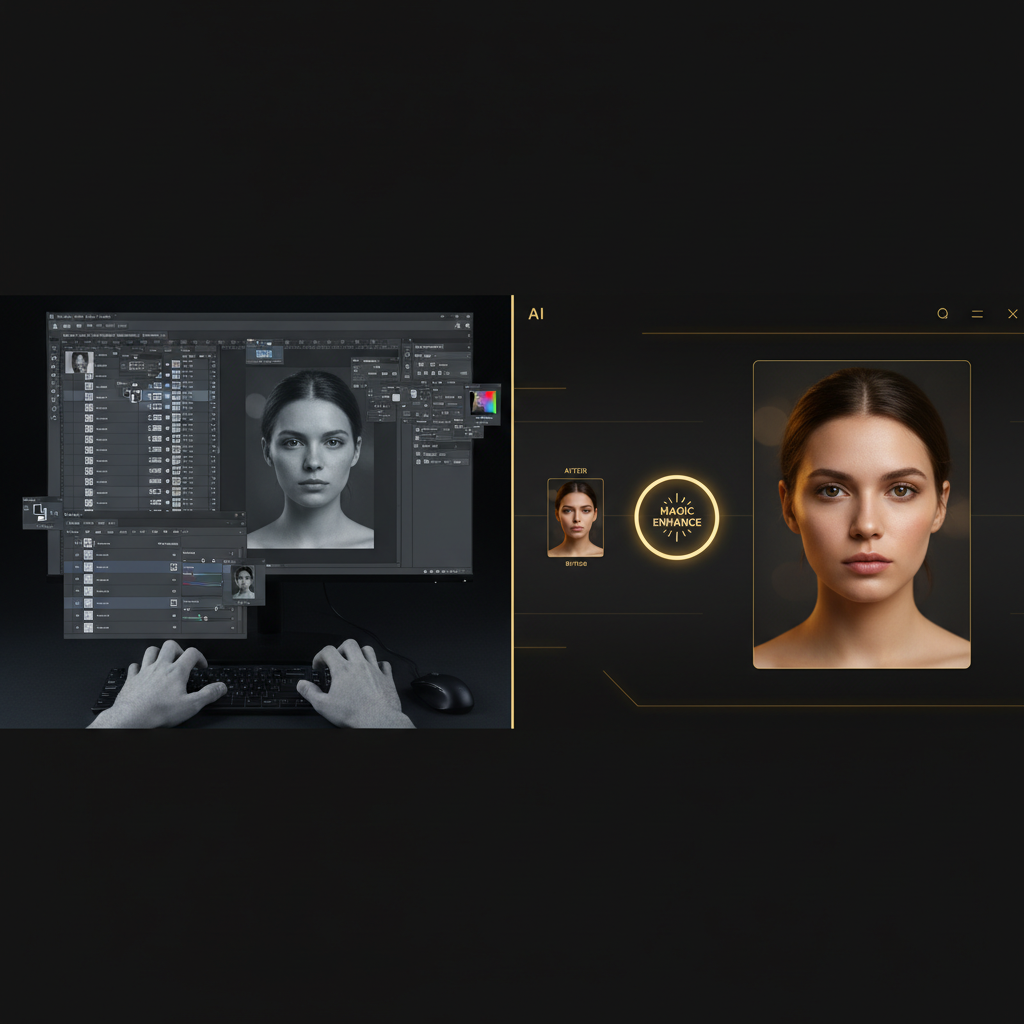
AI Photo Editing vs Traditional Workflow
AI vs manual editing comparison
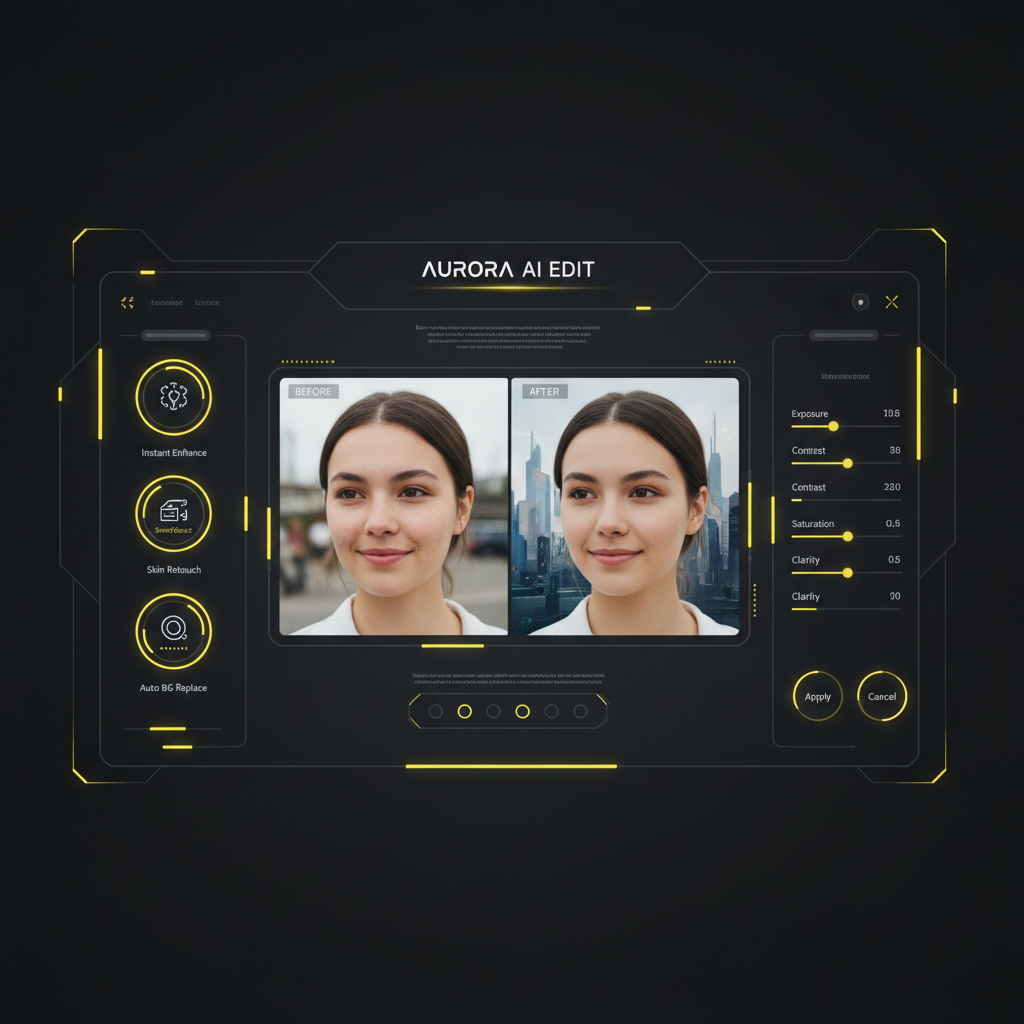
Modern AI Photo Editing Dashboard
AI editing benefits visualization
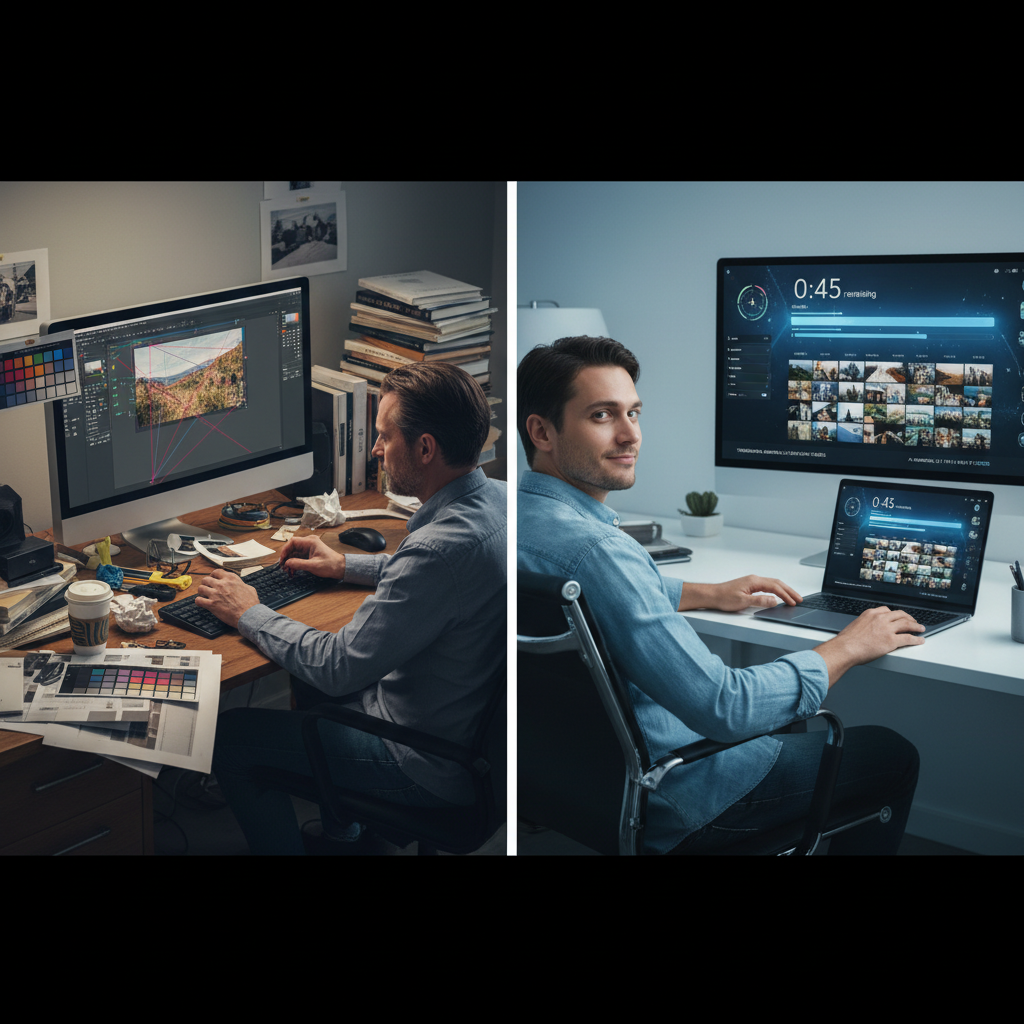
Photographer Workflow Side-by-Side
AI photo process comparison
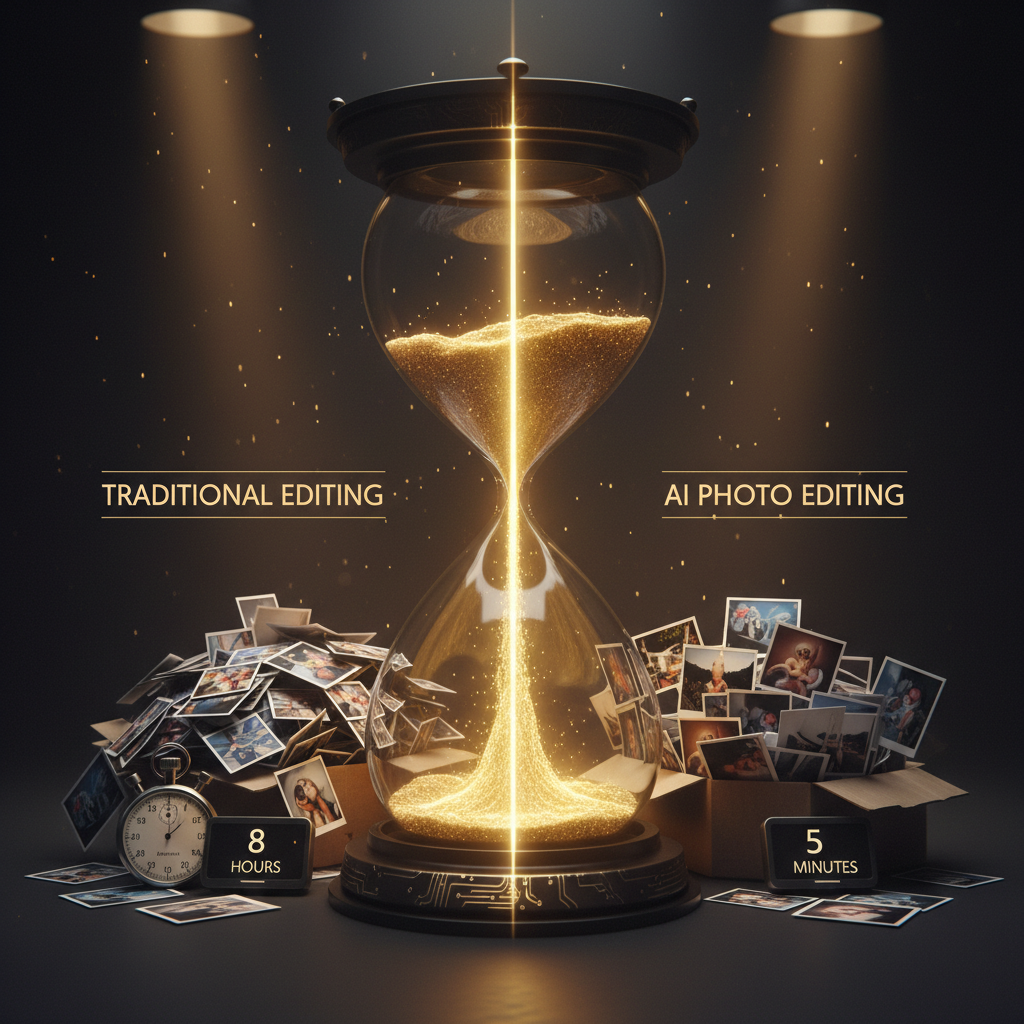
Time Savings Visualization
AI editing benefits in time
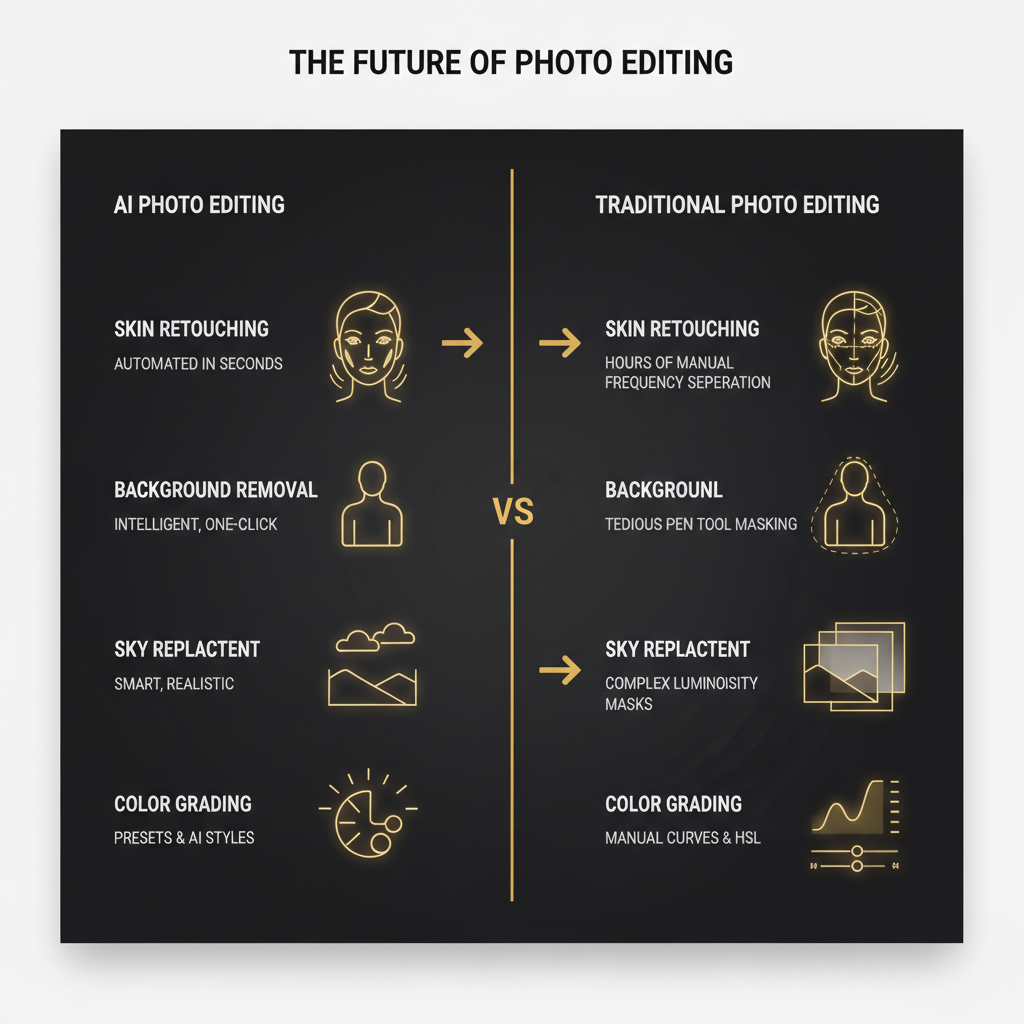
AI vs Manual Editing Benefits
AI photo process comparison
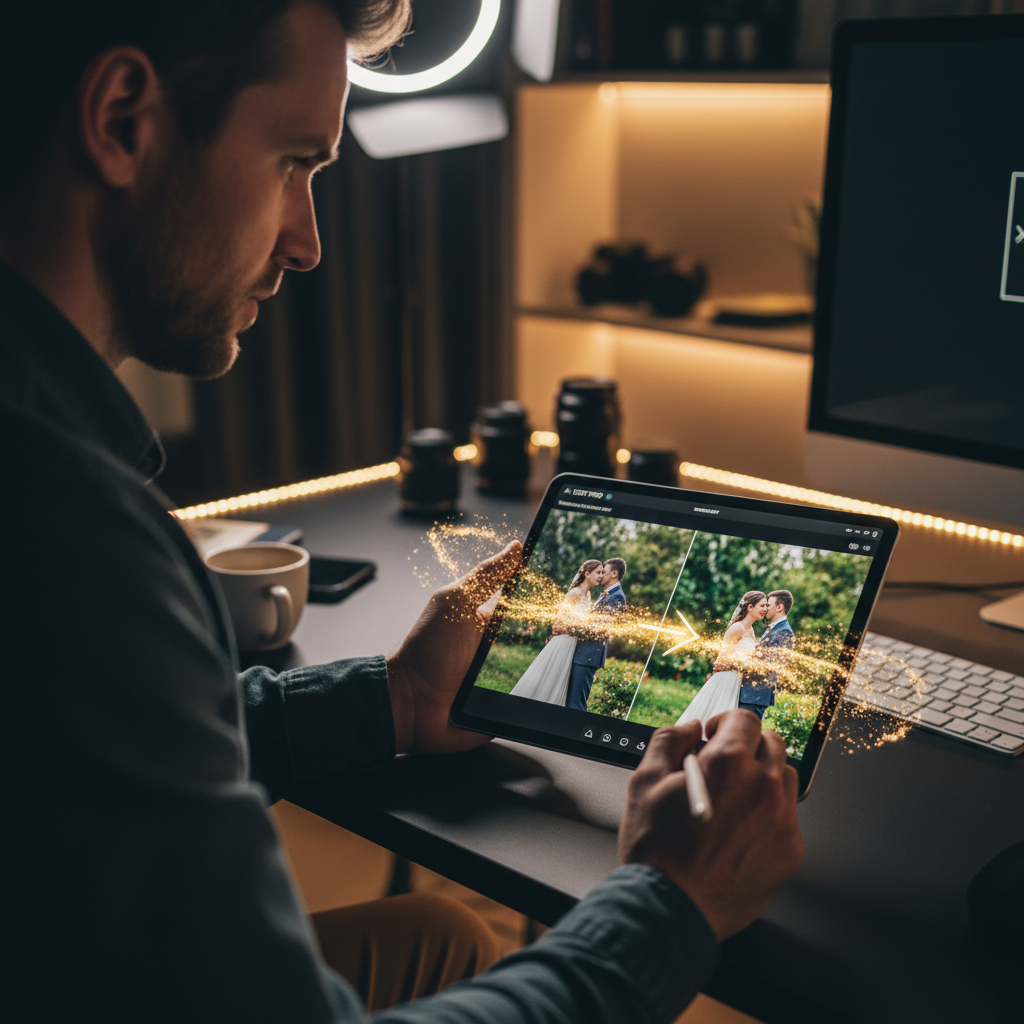
AI Photo Editing in Action
AI editing benefits for portraits
AI Photo Editing vs Traditional — Full Comparison
The honest AI photo process comparison: where AI vs manual editing wins decisively, and where traditional photo editing still has the edge
| Feature | AI Photo Editing | Traditional Editing |
|---|---|---|
| Time per portrait edit | 15–20 seconds | 30–90 minutes |
| Time per 600-photo wedding gallery | ~1 hour batch | 8–15 hours of slider work |
| Cost per image (basic retouch) | Fractions of a cent on $2.99 plan | $5–$25 outsourced |
| Cost per image (high-end portrait) | Fractions of a cent on $2.99 plan | $40–$150 outsourced |
| Skin retouching workflow | One preset, automatic | Frequency separation, dodge & burn |
| Sky & background replacement | Automatic in seconds | Pen tool masking, edge refine |
| Color grading | Preset prompts, instant | Manual curves, levels, LUTs |
| Software cost per year | $0 free, $2.99+ unlimited | $169–$239+ subscription |
| Learning curve | Type a prompt, done | Months to years |
| Creative control on hero shots | Strong but model-bounded | Pixel-perfect human control |
| Forensic / journalistic use | Not allowed (generative AI) | Industry-standard |
| Best for high-volume work | Yes — galleries, e-commerce, social | No — manual labor at scale |
AI Photo Editing Wins For
- • High-volume wedding, event, and portrait galleries
- • E-commerce and Amazon product photography at scale
- • Real estate listings, interior, and exterior photography
- • Social media content kits across multiple aspect ratios
- • LinkedIn headshots, blog headers, and editorial graphics
- • Solo photographers reclaiming weekends from the editing chair
Traditional Photo Editing Still Wins For
- • High-end fashion magazine covers and luxury brand work
- • Museum-grade fine art prints and gallery exhibition prints
- • Forensic, scientific, and journalistic photo editing
- • Pixel-perfect creative-director-driven hero shots
- • Detailed manual color management for printed advertising
- • Anyone who already loves the Photoshop slider workflow
How AI Photo Editing Works
Three steps, fifteen seconds — vs the thirty-to-ninety-minute traditional photo editing workflow
Pick an Editing Task
Tap one of the eight preset AI photo editing tasks that mirror traditional photo editing work — AI skin retouch, sky replacement, color grading, background swap, full portrait retouch, product cleanup, wedding edit, or real estate photo. Or skip the presets and describe your own AI photo editing vs traditional direction with details about the look, mood, and finish you want.
Generate the Edit
Click the generate button. The AI photo editing engine returns a 4K finished image in about fifteen seconds — the same task that takes thirty to ninety minutes in traditional Photoshop or Lightroom. Iterate live: tweak the editing direction, swap the preset, change the color grade or skin retouch intensity. AI vs manual editing makes twenty variants per session genuinely practical.
Download & Deliver
Download the AI photo editing output and use it as a finished wedding gallery image, e-commerce product listing, real estate marketing photo, LinkedIn headshot, blog hero banner, or printed magazine asset. AI editing benefits include 4K output ready for both digital publishing and large-format print — feed, story, banner, listing, magazine spread, or trade show booth graphic.
AI Editing Benefits Over Traditional Methods
Six concrete reasons photographers, photo editors, and digital artists pick AI photo editing over traditional Photoshop and Lightroom workflows
AI Photo Editing vs Traditional — 200x Faster
AI photo editing vs traditional Photoshop or Lightroom workflows is fundamentally a speed comparison. Traditional photo editing of a single high-end portrait — RAW develop, frequency-separation skin retouching, dodge and burn, color grading with curves, sharpening, and export — runs thirty to ninety minutes per image. AI photo editing finishes the same portrait in fifteen to twenty seconds. For a wedding gallery of 600 photos, traditional photo editing in Lightroom typically eats eight to fifteen hours of bracket-and-batch work; AI photo editing batches the same gallery in under an hour. AI vs manual editing is not a marginal speed bump — it is two orders of magnitude faster, which restructures a working photographer’s entire week around shooting and clients instead of slider-pushing.
AI Editing Benefits Cost: Pennies Per Image vs $5–$150
Traditional photo editing outsourced to a freelance retoucher costs $5–$25 per image for basic retouch and $40–$150 per image for high-end portrait or fashion work. A wedding gallery of 600 shots costs $1,500–$3,000 in retouching fees. The AI photo editing approach on AI Banana starts at $0 on the free tier and unlocks unlimited generations from $2.99 on a paid plan — fractions of a cent per image. The AI photo editing vs traditional cost comparison saves a working photographer thousands of dollars per quarter, and those saved hours convert directly into more shoots, more clients, and more revenue. AI editing benefits compound fastest for high-volume photographers, e-commerce sellers, real estate agents, and content creators.
Smart Skin Retouching Without Frequency Separation
Traditional photo editing skin retouching is a multi-step Photoshop ritual: split the photo into high-frequency and low-frequency layers, paint a soft brush across blemishes on the low-frequency layer, dodge and burn texture detail, build a luminosity mask for highlights, and check the histogram for crushed shadows. AI photo editing collapses that into a single preset. The AI photo editing vs traditional skin retouch comparison delivers polished, natural-looking skin that preserves pores and micro-texture without the plasticky over-smoothed look that ruins amateur traditional photo editing attempts. Photographers, photo editors, and digital artists save hours of frequency-separation work per portrait shoot.
Automatic Sky Replacement & Background Swap
Traditional photo editing sky replacement and background swap requires precise pen tool masking, edge refine work, color matching to the new sky, and shadow blending across foreground subjects — fifteen to thirty minutes per image of finicky cleanup. AI photo editing handles sky replacement, background swap, and edge blending automatically in seconds. The AI photo editing vs traditional comparison closes the gap between amateur photo editing and professional retouching: every real estate listing gets a dramatic sunset sky, every product shot gets a clean studio background, every portrait gets a polished bokeh backdrop without the masking labor. AI editing benefits make professional-quality compositing accessible to every photographer, not just the senior retoucher.
No Sign Up, No Credit Card Required
Traditional photo editing software locks the photo editing benefits behind expensive subscription paywalls — Adobe Photoshop and Lightroom run $239/year, Capture One runs $179/year, Affinity Photo runs $169 once-off. The AI photo editing approach on this page asks for nothing upfront — no account, no email verification, no credit card required. Type a description of the AI photo editing direction you want, click generate, and download a 4K result immediately. Free usage is protected with per-IP rate limits, not a login wall, so photographers, photo editors, and digital artists can validate the AI photo editing vs traditional comparison hands-on before committing to a paid plan starting at $2.99.
Reclaim Weekends From the Editing Chair
The AI photo editing vs traditional workflow shift is structural. Traditional photographers spend mornings shooting and afternoons culling, importing, and editing in Lightroom and Photoshop — sometimes more time editing than shooting. AI photo editing daily flow imports the shoot, runs a preset for color, skin, and sky, reviews the batch in minutes, and exports a finished gallery the same afternoon. AI editing benefits show up everywhere: photographers take more shoots per month, deliver galleries faster, get paid sooner, and reclaim weekends from the editing chair. AI photo editing vs traditional methods is not just a tool swap — it is a complete restructuring of where the creative hours go.
AI Photo Editing vs Traditional — FAQ
Everything photographers, photo editors, and digital artists ask about AI vs manual editing
Verdict: AI Photo Editing Wins for Most Working Photographers
The AI photo editing vs traditional comparison favors AI photo editing on speed, cost, and consistency for ninety percent of paid commercial work. Try the AI photo editing tool free, see the AI editing benefits in fifteen seconds, and reclaim your weekends.
Try AI Photo Editing FreeAI Photo Editing vs Traditional — The Honest Photographer's Guide
The AI photo editing vs traditional debate finally has a clear answer for most working photographers, photo editors, and digital artists in 2026. AI photo editing built on Nano Banana Pro and similar foundation models has crossed the threshold where AI vs manual editing produces equal or better quality on the everyday tasks that consume the majority of a professional editing week — skin retouching, sky replacement, background swap, color grading, perspective correction, and full portrait or product retouches. The AI photo process comparison on this page is the dedicated AI photo editing vs traditional entry point on aibanana.net for anyone evaluating AI editing benefits before committing budget, software, or time. Whether you have been searching for "AI photo editing vs traditional", "AI vs manual editing", "AI photo process comparison", or "AI editing benefits", this is the deep-dive comparison and live demo built for photographers, photo editors, and digital artists.
The AI photo editing vs traditional speed gap is the single biggest reason photographers switch. A traditional photo editing workflow for a single high-end portrait — RAW develop in Lightroom or Capture One, frequency-separation skin retouching in Photoshop, dodge and burn, curves and luminosity-mask color grading, output sharpening, and export — runs thirty to ninety minutes per image. AI photo editing finishes the same portrait in fifteen to twenty seconds. For a 600-photo wedding gallery, traditional photo editing in Lightroom typically eats eight to fifteen hours of bracket-and-batch slider work; AI photo editing batches the entire gallery in under an hour. The AI photo editing vs traditional comparison is not a marginal improvement — it is two orders of magnitude faster, which restructures a working photographer's entire week around shooting and clients instead of slider-pushing in front of a screen until midnight. AI editing benefits compound across every category: more shoots per month, faster gallery delivery, more clients, more revenue.
The AI photo editing vs traditional cost comparison favors AI photo editing just as decisively. Traditional photo editing outsourced to a freelance retoucher runs five to twenty-five dollars per image for basic retouch and forty to one hundred fifty dollars per image for high-end portrait or fashion work. A wedding gallery of 600 shots costs fifteen hundred to three thousand dollars in retouching fees alone. The AI photo editing approach starts at zero on the free tier and unlocks unlimited generations from $2.99 on a paid plan — fractions of a cent per image. Software-cost-wise, traditional photo editing tools like Photoshop and Lightroom run $239 per year, Capture One runs $179 per year, and Affinity Photo runs $169 once-off. AI photo editing on aibanana.net starts free and unlocks at $2.99. AI editing benefits compound fastest for high-volume photographers, e-commerce sellers, real estate agents, and content creators who ship hundreds of images per week — the AI photo editing vs traditional comparison saves thousands of dollars per quarter and converts directly into more shoots, more clients, and more revenue.
The AI photo editing vs traditional quality question is the one most photographers worry about going in, and the honest answer is nuanced. For Instagram feeds, LinkedIn headshots, Amazon and Shopify product shots, blog headers, wedding galleries, real estate listings, and most paid social ad creative, AI photo editing already matches or exceeds traditional photo editing on perceived quality — modern AI image models handle skin retouching, eye sharpening, sky replacement, background swap, color grading, and composition correction at a level that took professional retouchers a decade to learn. Where traditional photo editing still has the edge is high-end fashion magazine covers, luxury brand campaigns, museum-grade fine art prints, and forensic or journalistic photo editing where evidentiary integrity matters. Most working photographers blend the two — AI photo editing for bulk gallery work, traditional photo editing for hero shots that need a creative director's pixel-perfect human control. The AI photo editing vs traditional comparison is no longer about good-enough vs perfect. It is about speed, cost, and where a working photographer's creative hours actually go. AI vs manual editing in 2026 wins for most paid commercial work, and the AI editing benefits — speed, cost, consistency, weekends reclaimed — are the structural reason photographers keep switching. Try the AI photo editing tool above, see the AI photo editing vs traditional difference in fifteen seconds, and decide for yourself.